Perplexity SEO: Win Citations in AI-Powered Search
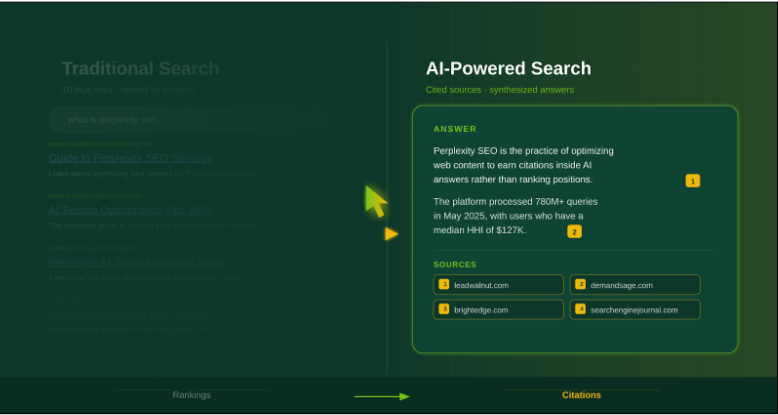
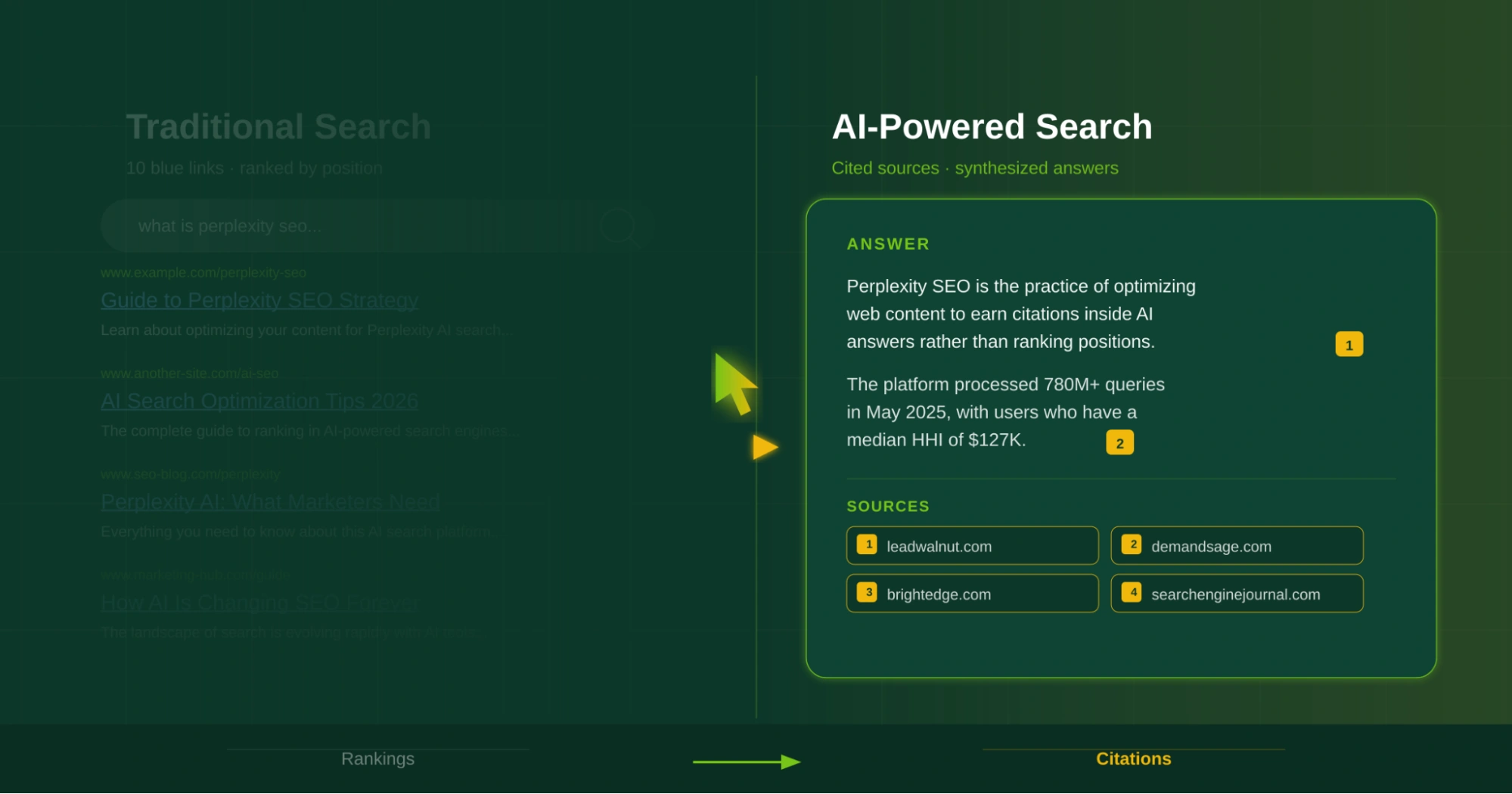
Perplexity SEO is the practice of optimizing web content to earn citations inside Perplexity AI's generated answers. Unlike traditional search engine optimization that targets ranking positions, Perplexity SEO targets source selection — getting a page chosen as one of three to five cited references that Perplexity surfaces for every query.
This distinction matters for B2B marketing leaders. Perplexity processed 780 million queries in May 2025, a 239% increase from August 2024. The platform's user base skews toward high-income professionals. Perplexity Pro subscribers carry a median household income of $127,000. These are the decision-makers that B2B SaaS companies need to reach.
The strategies that earn Perplexity citations also improve content clarity, authority, and conversion performance across every channel.
What Is Perplexity SEO?
Perplexity SEO — also called Perplexity AI optimization or Perplexity Answer Engine Optimization (AEO) — is the process of structuring content so that Perplexity's AI retrieval system can extract, verify, and cite it as a trusted source. The goal shifts from earning a position on a results page to earning a citation inside an AI-synthesized answer.
Traditional SEO and Perplexity SEO share foundational principles. Both require authoritative content, strong domain credibility, and technical accessibility. However, the execution differs in meaningful ways.
How Perplexity Differs From Google
Google ranks pages for human readers who click, browse, and evaluate. Perplexity cites pages for an AI model that extracts, synthesizes, and attributes. The table below highlights key differences.
| Dimension | Google SEO | Perplexity SEO |
|---|---|---|
| Success metric | SERP ranking position | Citation inclusion in answers |
| Content priority | Keyword relevance + engagement | Extractability + factual density |
| Freshness weight | Moderate (months) | Critical (days to weeks) |
| Ideal structure | Long-form narrative | Tables, definitions, concise blocks |
| Measurement | SERP position tracking | Share of answer monitoring |
Citations vs. Rankings
In Google, success means appearing in the top three organic positions. In Perplexity, success means becoming one of three to five sources cited inside the answer itself.
Perplexity's search team has stated that the platform does not optimize for click probability the way traditional engines do. Instead, it optimizes for helpfulness and factual accuracy. This means pages that provide direct, verifiable answers outperform pages designed to maximize time-on-page or reduce bounce rate.
For B2B brands, citations carry an added advantage. When Perplexity cites a source, it positions that brand as an authority in front of high-intent researchers. That credibility signal compounds across every touchpoint in the buyer journey.
Why B2B Brands Must Optimize
Perplexity AI represents the fastest-growing AI answer engine in 2026. B2B brands that ignore this platform risk losing visibility at the exact moment decision-makers research solutions.
Perplexity's Growth by the Numbers
The platform's trajectory signals a structural shift in how professionals find information.
| Metric | Value | Source |
|---|---|---|
| Monthly queries (May 2025) | 780 million | DemandSage |
| Monthly active users | 30 million+ | Click-Vision |
| Monthly website visits | 170 million+ | SimilarWeb via DemandSage |
| YoY user growth | 200%+ | Multiple sources |
| Perplexity Pro median HHI | $127,000 | Harbor SEO |
| Countries served | 238 | Index.dev |
The B2B Buyer Research Shift
B2B buyers increasingly use AI tools for purchase research. This behavior shift has direct implications for pipeline generation. Brands report 20–30% conversion rates from Perplexity traffic on high-intent pages such as free trials and demo signups. Perplexity also drives 6–10x higher click-through rates compared to ChatGPT.
How Perplexity Selects Sources
Perplexity selects sources through a multi-stage retrieval and quality-filtering pipeline built on Retrieval-Augmented Generation (RAG) architecture. Understanding this pipeline reveals exactly what content attributes earn citations.
RAG Architecture Explained
When a user submits a query, Perplexity follows a structured sequence:
- Query classification — The system categorizes the query as factual, comparative, procedural, or opinion-based. Each category triggers a different retrieval strategy.
- Candidate retrieval — Perplexity pulls candidates from its custom-crawled index (approximately 5 billion URLs) and falls back to Bing's index for long-tail queries.
- Quality reranking — A multi-layer reranker applies quality thresholds, filtering out candidates that fail extractability or authority checks.
- Source blending — A blending mechanism prevents any single domain from dominating. It balances sources across domain types and limits web-link percentages.
- Citation synthesis — The model generates a concise answer with inline citations, attributing specific claims to specific sources.
This architecture means SEO and answer engine optimization require different approaches. Pages that rank well on Google may fail Perplexity's extractability test. Conversely, well-structured niche content from lower-authority domains can earn citations when the content directly answers the query.
Seven Core Ranking Signals
Research and reverse-engineering across multiple studies point to seven signals that influence Perplexity citation probability. These signals map well to content that also converts.
| Signal | What It Means |
|---|---|
| Domain authority | Sites with DA 40+ are sourced approximately 6x more often |
| Content freshness | Recently published or updated content gets priority |
| Extractability | Direct answers in the first 100 words score highest |
| Factual density | Original data, stats, and verifiable claims strengthen selection |
| Structural clarity | Tables, numbered steps, and a clear H2/H3 hierarchy aid extraction |
| Entity coverage | Full entity names, proper attribution, and topic completeness matter |
| Third-party validation | Content cited elsewhere becomes a safer pick for Perplexity |
Six Tactics to Earn Citations
Earning Perplexity citations requires a deliberate content strategy. The following six tactics address each of the platform's core ranking signals.
Lead With the Answer (BLUF)
Bottom Line Up Front (BLUF) formatting is the single most impactful change for Perplexity visibility. Research shows 90% of winning citations provide a direct definition or answer within the first 100 words.
Wrong approach: Opening with a 200-word narrative setup before delivering the answer.
Right approach: Starting with a clear, self-contained statement that an AI model can extract and cite directly.
Every H2 section should open with a direct, extractable answer. This practice also improves user experience — visitors find what they need faster, which lifts engagement metrics and conversion rates.
Structure for Extraction
Perplexity's NLP model reads page structure as semantic markers. Content formatted for easy extraction earns more citations.
- Use HTML tables instead of paragraph comparisons
- Break processes into numbered steps
- Define terms clearly at the start of relevant sections
- Apply consistent H2/H3 hierarchy throughout
- Add FAQ sections with concise, standalone answers
Build Topical Authority Clusters
A single high-quality article rarely earns sustained Perplexity visibility. The platform rewards deep, interconnected expertise within a niche.
Build content clusters around core topics. Link pillar pages to detailed sub-topic pages, comparison guides, and FAQ resources. This topical depth signals authority to both Perplexity and Google.
For B2B SaaS companies, cluster topics around buyer pain points. Map content to specific stages of the decision journey. This approach strengthens both AI citation probability and pipeline contribution from organic search.
Prioritize Content Freshness
Perplexity's reranker system heavily weights freshness. Content published or updated within the past 2–3 days receives a visibility boost. Outdated pages lose citation eligibility quickly.
Practical freshness tactics include adding recent data points with current-year references, updating statistics and source links quarterly, and implementing the IndexNow protocol for faster indexing by AI crawlers.
Strengthen Domain Credibility
Domain authority remains a critical signal. Sites with DA 40+ earn citations at significantly higher rates. Credibility-building tactics that support Perplexity visibility include publishing original research and proprietary data, earning citations from industry authorities, maintaining verified profiles on review platforms such as Clutch and G2, and building an active presence on LinkedIn, YouTube, and Reddit — platforms Perplexity frequently cites.
Monitor and Iterate
Without measurement, optimization is guesswork. Track Perplexity citation performance using prompt-level monitoring tools that measure share of answer, citation frequency, and competitor citation patterns.
From Visibility to Pipeline
Perplexity SEO delivers visibility. But visibility without conversion is a vanity metric. The real opportunity lies in connecting AI search citations to a qualified pipeline.
The content strategies that earn Perplexity citations — answer-first formatting, structured data, clear value propositions — also improve on-page conversion rates. Clean structure reduces friction. Direct answers build trust. Factual density establishes credibility.
B2B brands that pair Perplexity optimization with conversion rate optimization (CRO) capture compounding returns. More citations drive more high-intent traffic. Better page experiences convert that traffic into demo requests, trial signups, and qualified opportunities.
This integrated approach addresses the enterprise SEO revenue gap that many B2B SaaS companies face — strong organic traffic that fails to translate into sales-qualified pipeline. The brands that optimize for both citation and conversion will outperform those treating SEO and CRO as separate functions.
FAQ
Does Perplexity use Google's ranking algorithm?
No. Perplexity uses its own RAG-based retrieval system with a custom index and Bing fallback. Citation selection prioritizes extractability, authority, and freshness rather than Google's ranking signals.
Can small-DA sites earn Perplexity citations?
Yes. Perplexity's index covers roughly 5 billion URLs — far smaller than Google's. Well-structured niche content from lower-DA domains can earn citations when it directly and clearly answers the query.
How often should content be updated?
High-priority pages should receive meaningful updates every 2–4 weeks. Add current-year data, refresh statistics, and update source links to maintain citation eligibility.
What formats perform best in Perplexity?
Tables, numbered step-by-step guides, concise Q&A blocks, and clearly labeled definition sections. These formats allow Perplexity's extraction model to pull structured information directly into answers.
How do B2B companies track citations?
AI search visibility tools such as Otterly, Profound, and AIclicks monitor citation frequency, share of answer, and prompt-level visibility across Perplexity and other AI engines.

Subscribe to our blog

How can LeadWalnut help?

Related Articles
Perplexity SEO: Win Citations in AI-Powered Search