Buyers no longer start every search on Google. Many open ChatGPT, ask a question in plain language, and act on the brands it names. That behaviour is now mainstream in enterprise buying, with most buyers taking answers straight from AI summaries without clicking through.
For B2B teams, the goal shifts from ranking a page to becoming the answer. The sections below define ChatGPT SEO, show how it differs from traditional SEO, and lay out an audit, diagnose, and bridge framework proven on a brand once invisible in AI search.
What ChatGPT SEO Is And Why It Matters Now
ChatGPT SEO is a form of generative engine optimization (GEO). It shapes content and brand signals so AI assistants cite a company inside their answers. It overlaps with answer engine optimization (AEO) and shares roots with traditional SEO, but the goal is different. The win is not a ranked URL. It is a named brand inside the answer a buyer reads.
It matters now because the audience has moved. Enterprise buyers run product research, vendor comparisons, and category questions through ChatGPT, Perplexity, and AI Overviews before sales ever hears from them. Most of that research ends inside the AI summary. Buyers read the answer, note the brands cited, and shortlist from there.
A brand left out of the summary is left out of the conversation. A brand cited inside it enters the shortlist by default. The companies treating this as a core channel now will define their categories in AI search. The rest will spend years trying to catch up.
How ChatGPT SEO Is Different From Traditional SEO
The two disciplines share fundamentals but optimise for different outcomes. Traditional SEO fights for a ranked position on a results page. ChatGPT SEO fights for a mention inside the answer itself.
The shift is from page-level competition to brand-level competition. A strong page can still rank without a strong brand. A weak brand rarely gets cited, no matter how well its pages are optimised.
Why Your Brand Is The Top Ranking Factor In ChatGPT
Keywords told Google what a page was about. Language models work differently. Before citing a source, an LLM tries to confirm what a brand does, who it serves, and whether others treat it as credible. Three things follow.
● Brand clarity is the strongest lever. Generic positioning gives the model no reason to pick one company over a dozen rivals using the same words. If a brand's category, product, and buyer are not described the same way across its site, LinkedIn, and press coverage, the model hedges and cites someone else.
● External validation beats self-description. What press, forums, analysts, Wikipedia, and LinkedIn say carries more weight than a brand's own copy. According to Semrush's Ghost Citations study, 62% of AI citations are ghost citations, where a site gets linked but the brand name is never spoken in the answer. Owned pages alone rarely translate into brand recognition.
● Consistency compounds. The more often a brand is described the same way across the web, the more confidently a model can cite it. When that pattern is clean, the citation follows. When it is fragmented, the answer names a competitor.
The strongest ChatGPT SEO lever is not a page. It is a brand described the same way, in enough trusted places, for the model to be sure.
How ChatGPT, Perplexity & Gemini Search Differently
The three leading AI engines retrieve and reward sources in different ways. Optimising for all three means covering each behaviour, not picking one.
The overlap between them is smaller than most teams assume. A brand cited in ChatGPT will not automatically show up in Perplexity or Gemini. The engines pull from different indexes, favour different formats, and weigh different signals. A serious GEO programme covers all three in parallel.
How ChatGPT Decides Which Brands To Cite
Models apply a rough sequence of trust checks before naming a source. Understanding them shows where to focus effort.
Authority is measurable. According to SE Ranking, sites with more than 32,000 referring domains are 3.5x more likely to be cited by ChatGPT, and traffic only starts correlating with citations above roughly 190,000 monthly visitors.
How To Rank In ChatGPT: Audit, Diagnose, Bridge
Earning citations is not guesswork. It follows a repeatable three-stage loop. The loop works for any B2B brand with an AI visibility gap. Category, size, and stage do not change the playbook.
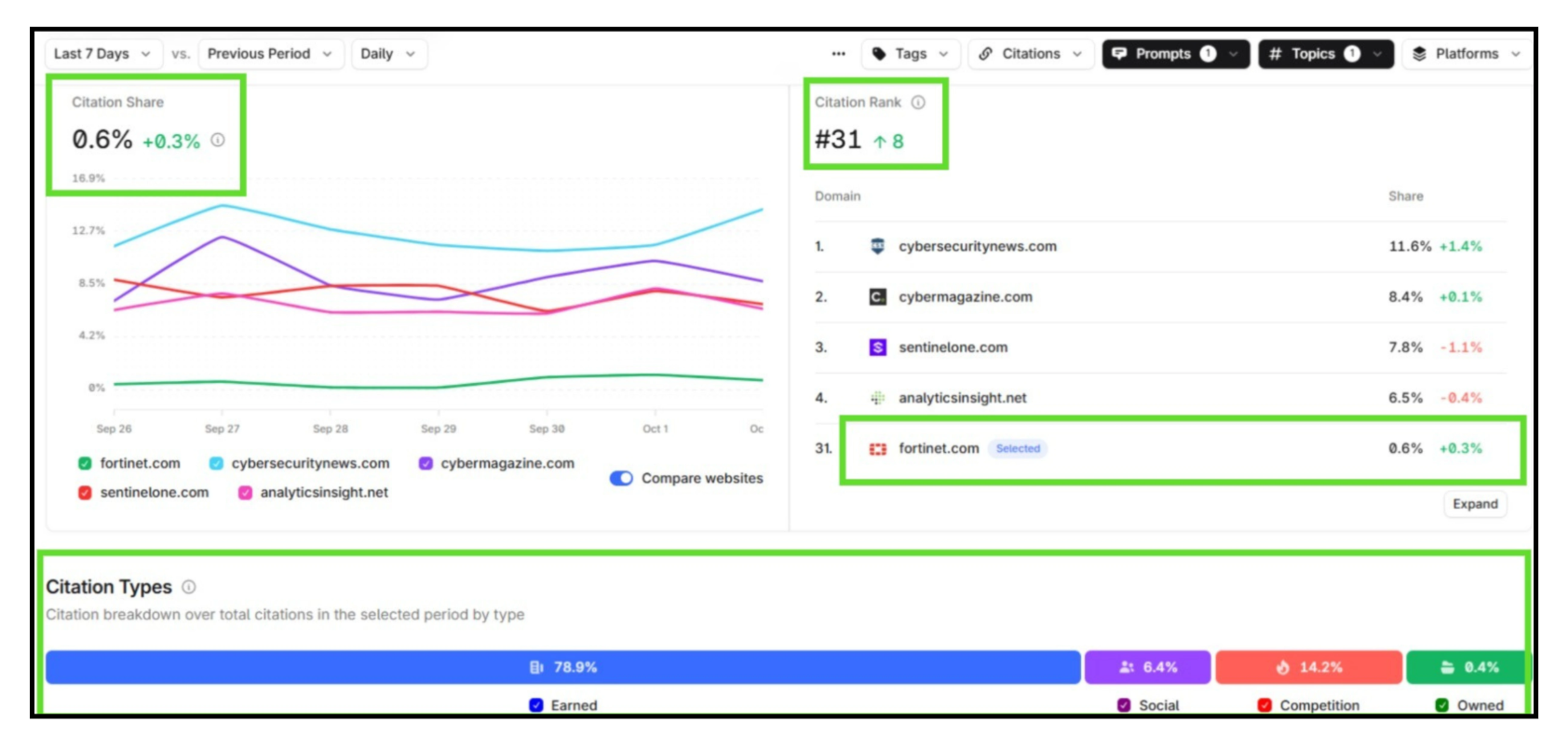
The problem: A B2B brand can invest heavily in SEO, content, and paid channels and still be invisible in AI answers. Buyers now open ChatGPT, Perplexity, or Google AI Overviews before visiting any website. A structured audit often reveals AI citation shares below 1% for the brand's own category. High-intent comparison queries return zero mentions. Competitors get named as defaults. Deals are shortlisted before the brand enters the conversation.
The approach: A three-stage loop: audit, diagnose, bridge. It applies to any B2B brand facing an AI visibility gap.
Run The Prompt Audit
Start by baselining the "before" state. Build a set of ICP-aligned buyer prompts. Run them across ChatGPT and other LLMs. Log where the brand appears and where it does not.
● Build a 10 to 20 prompt ICP set. Use formats like "best [category] for [use case]" and "compare [brand] vs [competitor]."
● Log each result as mentioned, cited-with-link, or absent.
● Record citation share as the baseline metric to improve against.
The audit typically runs across ChatGPT, Perplexity, and Google AI Overviews. Prompts cover the brand's core categories and top competitor comparisons. The output pinpoints the specific queries the brand is shut out of. The audit gives the team a clean baseline to measure every future move against.
Diagnose Why ChatGPT Skips Your Brand
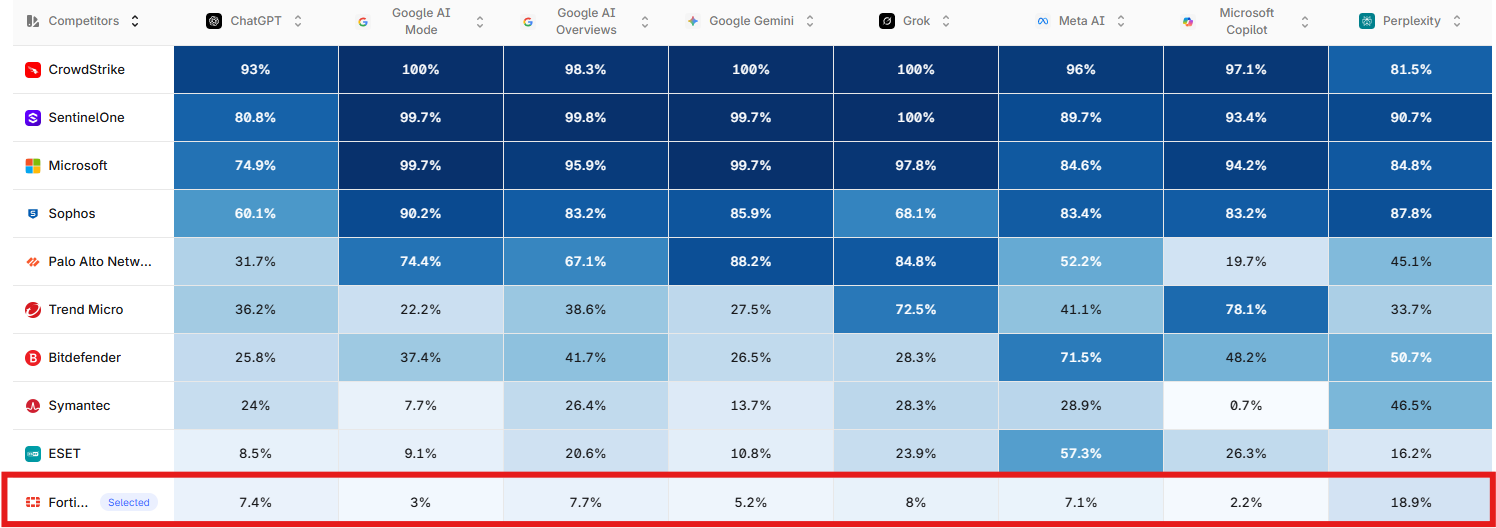
A citation gap matrix surfaces three things:
● Where the brand is absent
● Where competitors dominate
● Which content types earn the citations
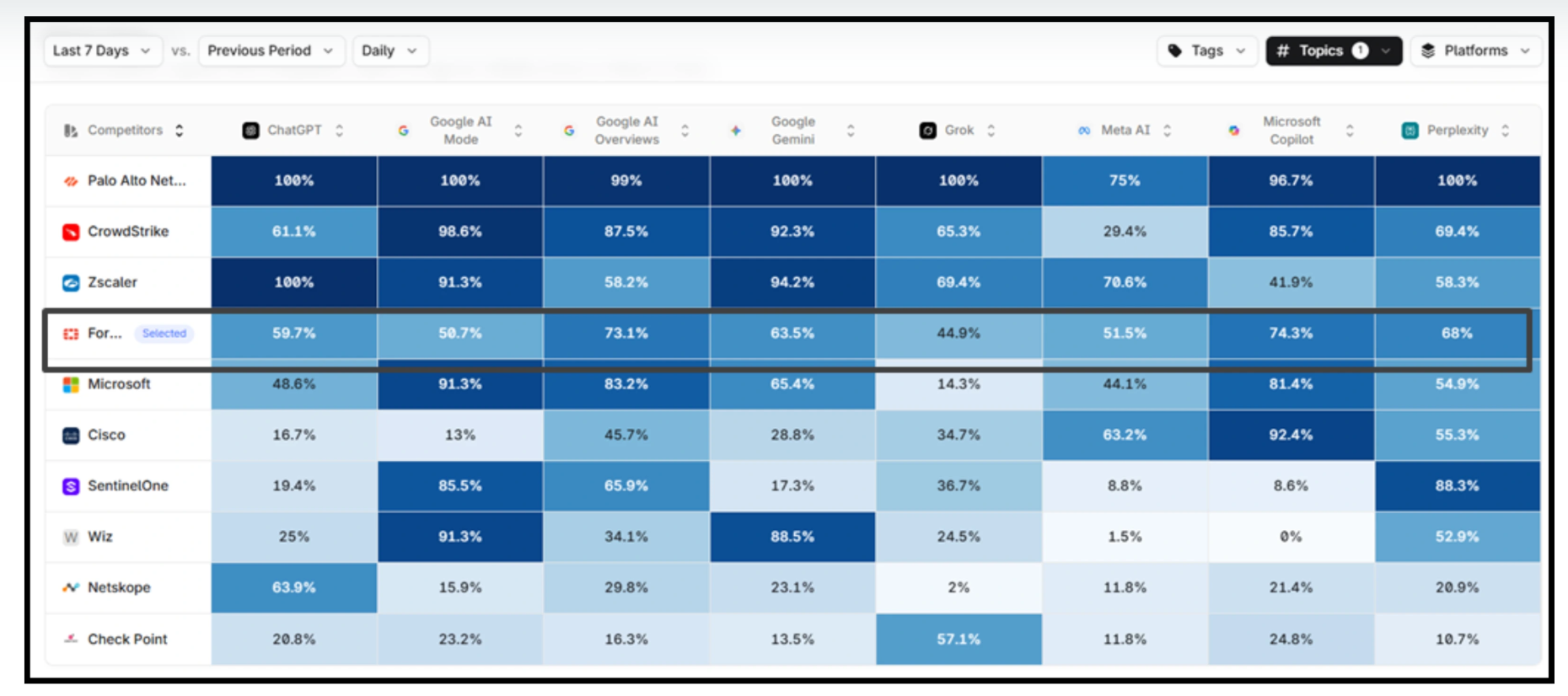
Build the matrix. List the brand and two or three top competitors on one axis, and ChatGPT, Google AI Overviews, and Perplexity on the other. Fill each cell with citation shares from the prompt audit to see where the gaps sit.
Tag each cited URL by source:
● Owned: the brand's own site
● Earned: third-party media, analyst coverage, review platforms like G2 or Capterra
● Social: Reddit, Quora, community forums
Most category citations come from earned media, not owned pages. Brands relying on their own site get systematically outranked. The fix is rarely more owned content. It is closing the earned-media gap.

Bridge The Gaps: Earned, Owned & Social
Close the gaps across three channels in parallel. Each plays a different role. Skipping one leaves citations on the table.
Earned. Most category citations come from third-party media, analyst coverage, and review platforms like G2 and Capterra. Pitch the brand into industry listicles. Reinforce coverage in the trade publications LLMs already cite for competitors. Prioritize the exact source domains flagged in the audit.
Owned. Rebuild the pages LLMs pull from most. Comparison pages, listicles, and structured Q&A get cited more than product pages. Fix H1s to answer the query directly. Add FAQ schema. Lead the first 100 words with a clear definition or answer. For more details, explore the complete guide to optimizing blog content for LLMs.
Social. Mention volume on Reddit and Quora correlates with citations. Find the threads ChatGPT already cites for competitors. Answer real ICP questions there. Skip promotional language.
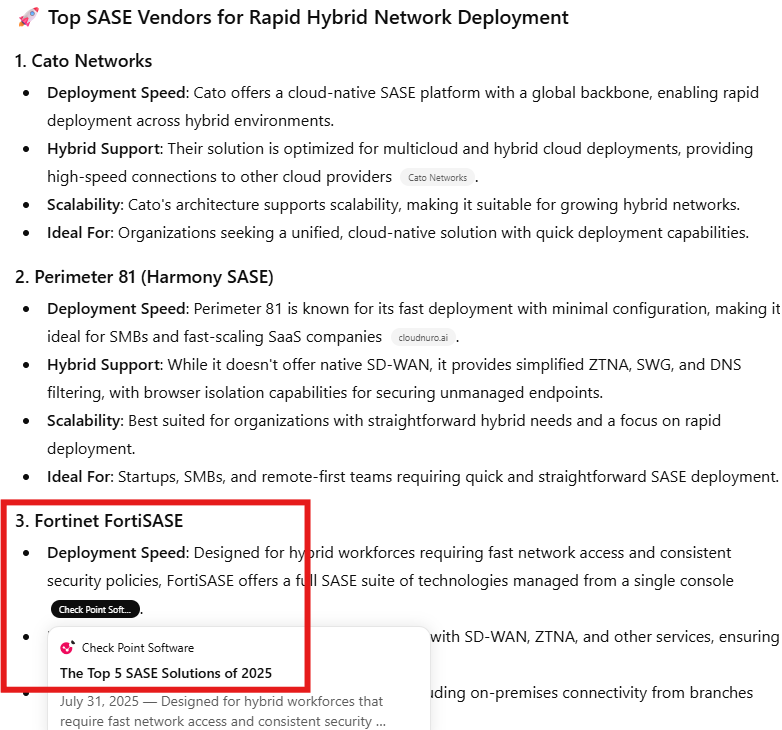
5 ChatGPT SEO Tactics That Earn AI Citations
Each tactic below bridges the earned, owned, social, and technical gaps the audit uncovers.
1. Build external credibility through digital PR and mentions
Earn mentions on sites the model already trusts: industry press, podcasts, communities, and review platforms. In AI search, an unlinked brand mentioned in a credible article can outweigh a low-quality backlink.
Example: A cybersecurity vendor that earns an authentic mention in r/cybersecurity plus a quote in Dark Reading is far more likely to surface than one relying only on its own blog.
2. Publish proprietary, experience-led content
Generic "5 tips" posts are exactly what models already synthesize. What they cannot reproduce is first-hand evidence: original benchmarks, customer outcomes with real numbers, and an argued point of view. The Princeton GEO study found that adding original statistics and citing sources were the two strongest levers for lifting a page's AI citation rate.
Example: A SaaS brand publishing "We analysed 500 customer accounts and found X" earns citations that no rewrite of public data can match.
3. Structure pages with direct-answer blocks and FAQs
Models lift self-contained answers. Open key sections with a tight 40 to 60-word answer to the exact question, then expand. Add an FAQ mapped to real buyer questions, since each Q&A pair is a citation candidate.
Example: Investopedia gets cited constantly because every page opens with a crisp definition. A B2B page starting a section with "GEO is..." in 40 words, then expanding, mirrors that citable pattern.
4. Build a knowledge graph so ChatGPT understands your brand
A knowledge graph is the connective tissue that tells an LLM who a brand is and how it relates to other entities. Without it, the model infers and, when in doubt, abstains. Three elements remove the ambiguity:
● Entity identifiers (@id) — a unique, consistent ID so every mention resolves to one entity.
● Organization graph (@graph) — products, people, and services defined once and referenced across the site.
● sameAs links — code-level references to verified profiles on LinkedIn, Crunchbase, Wikidata, and Wikipedia.
Example: When a brand's site, LinkedIn, Crunchbase, and Wikidata all carry matching JSON-LD with the same @id and sameAs links, ChatGPT can confidently attribute a claim to that company. Server-side rendering matters too. A page that loads only in the browser can look empty to AI crawlers.
5. Cover the full question with query fan-out
ChatGPT often breaks a complex question into smaller sub-questions and answers each, a pattern called query fan-out. Map those sub-questions and make sure content addresses each one. B2B teams applying this to their own content can borrow from these ChatGPT-driven SEO tactics to structure coverage across the chain.
Example: Ask "best GEO strategy for B2B SaaS" and the model silently searches "what is GEO," "GEO vs SEO," and "how to measure GEO." A site with a page for each sub-topic can appear across the whole chain, not just the headline term.
The combined payoff is measurable. According to a Princeton-led study (KDD 2024), Generative Engine Optimization strategies can boost a page's visibility in AI answers by up to 40%.
How Marketing Leaders Should Approach ChatGPT SEO
ChatGPT SEO is not one team's job. Each leader owns a slice.
The CMO treats share of voice in AI answers as a category-leadership metric, sitting alongside brand awareness on the board deck.
The VP of Demand Gen sees it in the pipeline. Prospects arriving from AI recommendations are pre-educated, which shortens cycles and lowers CAC.
The SEO or content lead owns execution: schema, knowledge graph, direct-answer blocks, and the ongoing prompt audit.
Product marketing owns the language the model repeats. When category and product descriptions drift across the site, LinkedIn, and G2, the model hedges and cites a competitor.
The four roles reinforce each other. Strong entities are wasted on fuzzy positioning. Great positioning is invisible without citable structure.
Turn ChatGPT Citations Into A Revenue Report
Marketing leaders need a metric, not a hunch. The standard is share of voice in AI answers: how often a brand appears for a set of buyer prompts versus competitors. Build a list of 15 to 30 real buyer prompts, run them across engines, and log mentions, sentiment, and citations.
A closer look at the best ChatGPT rank tracking tools for B2B brands covers the current landscape in depth. In short:
Set the cadence by category speed. Weekly for competitive B2B categories, bi-weekly at minimum elsewhere. Model behaviour drifts, so a one-time check goes stale fast.
For pipeline attribution, the formula is simple:
What A B2B GEO Win Looks Like
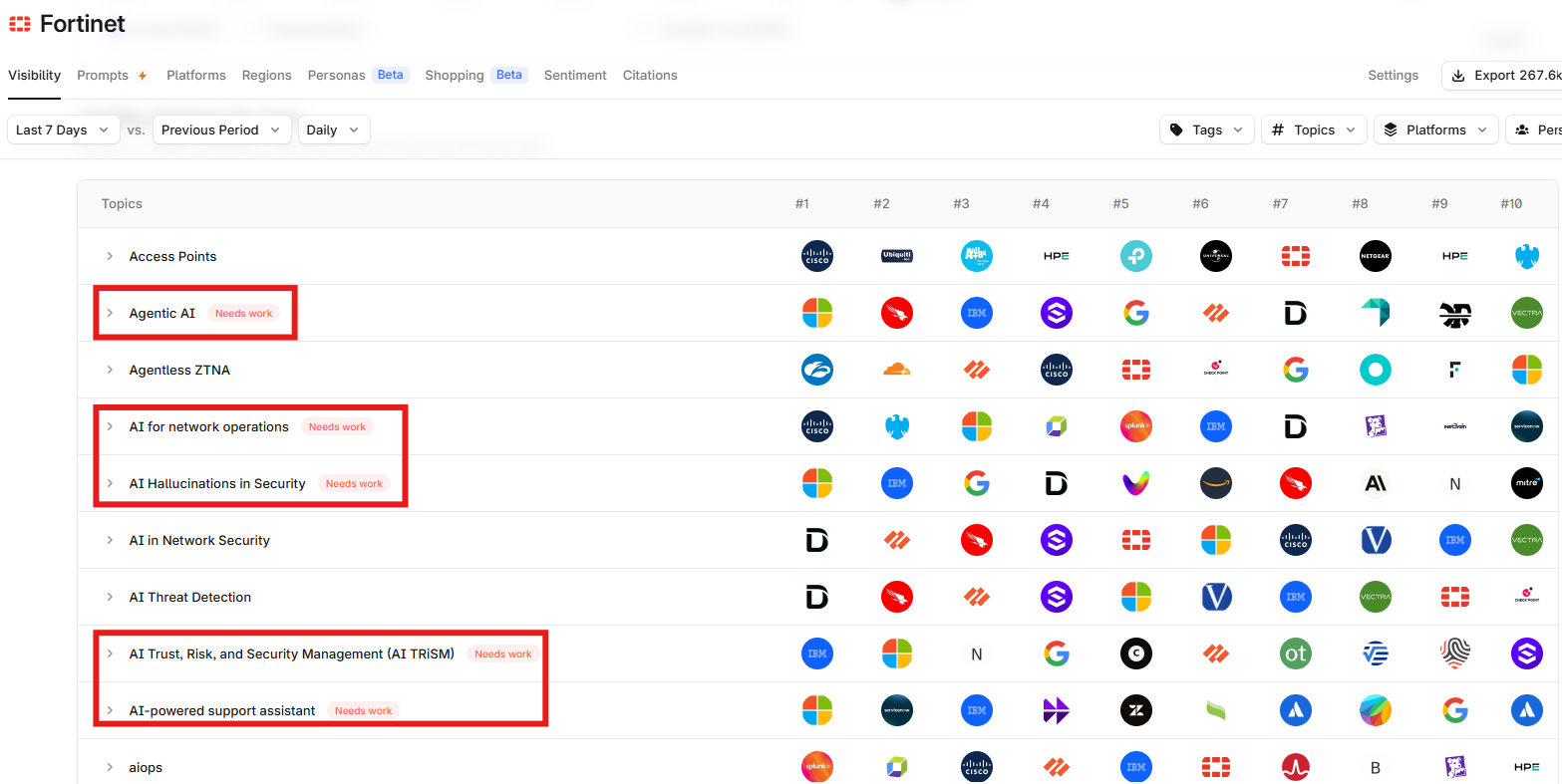
Fortinet leads its category on every traditional benchmark: 50% global firewall market share, 700,000+ customers, $6B in annual revenue, and #1 position across firewalls, SASE, cloud security, and SecOps. AI answers told a different story.
The Problem
Buyers were shortlisting vendors inside ChatGPT before Fortinet entered the conversation.
The diagnosis
A multi-platform audit across ChatGPT, Perplexity, and Google AI Overviews showed Fortinet trailing competitors by 30 to 40 points. The source breakdown identified the real bottleneck: 78.9% of category citations came from earned media, where Fortinet had minimal coverage. Owned content quality was not the issue.
The solution
A dual-track programme ran in parallel to close the earned-media gap while making owned pages citation-ready.
The result
Citation share moved on every tracked platform, and target pages surfaced inside AI answers within the first month.
● SD-WAN vs MPLS page featured in Google AI Overviews within 3 weeks
● New listicles reached Page 1 within 7 days
● ChatGPT citations earned for cloud-security queries Fortinet was previously excluded from
● Citation share climbed across ChatGPT, Perplexity, and Google AI Overviews
● Category rank improved in Fortinet's core spaces for the first time in the tracked window
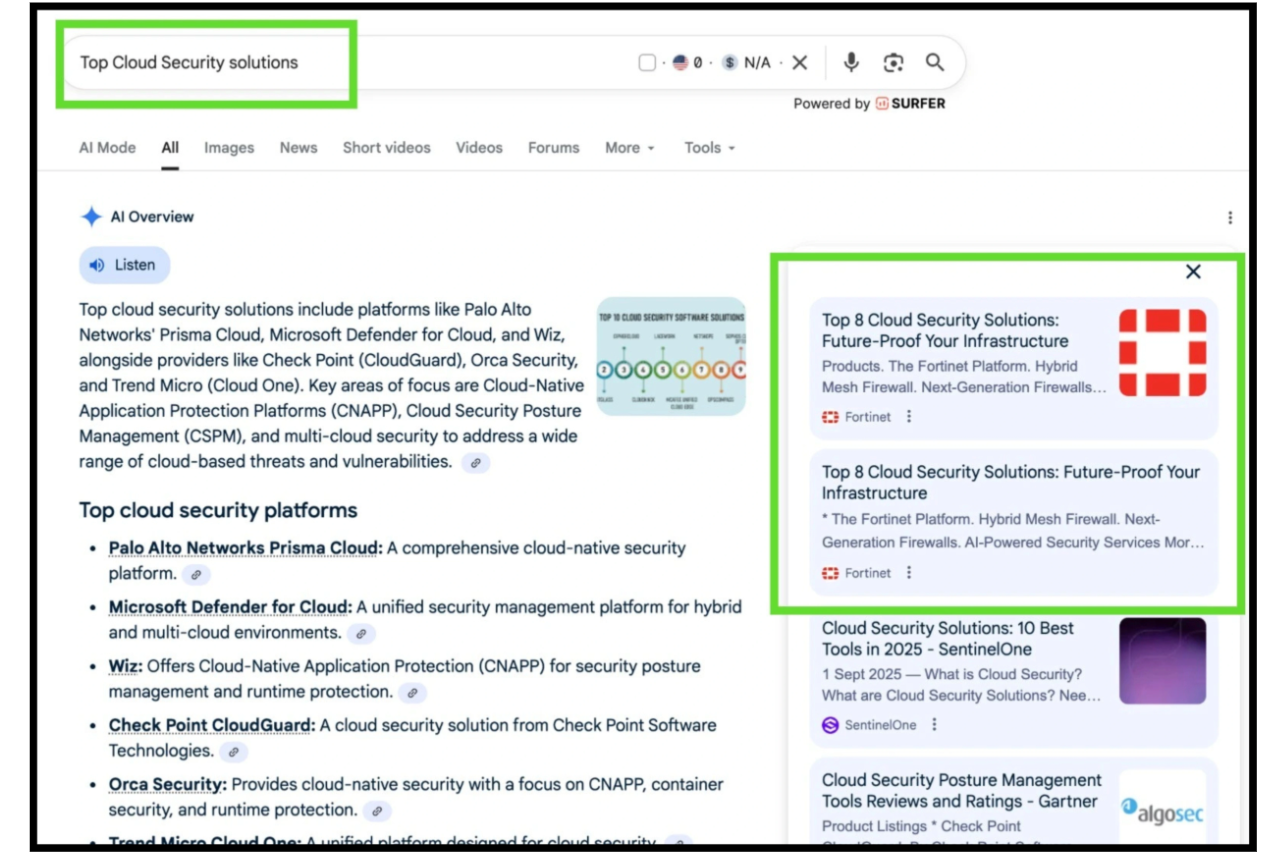
Read the Fortinet LLM case study for the audit method, execution plan, and full numbers.
Why The Brands ChatGPT Recommends Win The Deal
ChatGPT SEO closes a simple loop:
● Audit the citation gap across ChatGPT, Perplexity, and Gemini.
● Optimise across earned, owned, and social to close it.
● Measure citation share against pipeline, not rankings.
Brands that appear in the AI answer enter the buyer's consideration set. The ones that do not are filtered out before a human ever compares them.
The proof is blunt. A brand with 50% firewall market share was invisible at 0.6% citation share until a structured audit revealed the gaps and a three-channel strategy closed them within weeks. In AI search, visibility (not market share alone) decides who gets shortlisted, which is why this work feeds directly into conversion and revenue.
FAQ
How long does it take to see results from SEO for ChatGPT?
On-page and schema fixes can register within weeks. Fortinet's restructured page was featured in AI Overviews in three weeks, while authority and earned-media gains usually take a few months to move citation share.
Can smaller B2B SaaS brands compete with large enterprises in ChatGPT recommendations?
Yes. Citation share depends on structured, citable content and third-party validation, not size alone. A market leader can sit at 0.6% while a focused challenger earns the citation.
Does ChatGPT SEO replace Google SEO or complement it?
It complements it. Strong organic rankings still feed AI Overviews and Gemini, so the smartest approach is dual optimisation for both traditional and AI search.
If a page ranks #1 on Google, will ChatGPT cite it?
Not automatically. Only about 12% of URLs cited by ChatGPT rank in Google's top 10. ChatGPT applies its own selection criteria, favouring pages with clear entities, third-party validation, and answer-ready structure over pure keyword strength.
Where should B2B teams invest first for ChatGPT visibility?
Start with the audit. Baseline citation share across 30 to 50 buyer prompts, then fix the largest gap first. For most B2B brands, that gap is earned media and entity clarity, not more owned content.



How can LeadWalnut help?

Related Articles
Landing Page Conversion Rate: Benchmarks for B2B SaaS
How AI Answer Engines Choose Which Product Pages to Cite