Most AI content writing tools can produce a draft in seconds. Very few produce a draft that gets cited by AI search. That gap is the real problem for B2B teams in 2026. Buyers now ask ChatGPT, Perplexity, and Google's AI for recommendations. A content writing AI that cannot earn the trust of these engines makes volume worthless.
This guide compares the ten best tools for B2B marketing, using verified ratings and live pricing. It also covers the editing layer that decides whether a draft ranks or gets ignored.
How AI Search Is Changing Content Discovery
Content discovery once started with a search box and ten blue links. It now starts with a question asked to an assistant.
A buyer opens ChatGPT, Perplexity, or Google's AI and asks for a shortlist. The assistant returns a few named vendors and a line of reasoning on each. The comparison happens inside that answer, before any website is opened.
This behaviour is now mainstream. According to G2, 51% of B2B software buyers now start their research with an AI chatbot more often than Google.
Ranking on page one no longer guarantees a buyer sees the page. Visibility is decided earlier, inside the assistant's answer.
Why AI Content Rarely Gets Cited
The web is now flooded with AI-written content. That volume creates a false sense of progress.
Most of that content never earns a place in an AI answer. According to Graphite, only 18% of articles cited by ChatGPT are AI-generated, while 82% are written by humans.
The reason is not the tool. It is the output. Most AI drafts repeat what already exists, without fresh data, expert input, or a clear point of view. AI engines have no reason to cite another generic summary.
Volume alone does not earn citations. Content earns them by adding something an engine cannot already find elsewhere.
Why Marketing Leaders Don't Trust AI Content
Adoption is nearly universal, but trust is not. According to the Content Marketing Institute, 95% of B2B marketers say their organization uses AI applications, and 89% use AI for content creation.
Confidence has not kept pace. The distrust comes down to a few consistent problems:
- Effectiveness stays flat: The same research shows most teams rate their content marketing as only somewhat effective, despite producing far more with AI.
- Output reads generic: Unedited AI drafts repeat what already exists, with no fresh angle a reader or an engine would value.
- Accuracy carries risk: Invented facts and fake sources slip into drafts, and the cost to brand and credibility lands on the team, not the tool.
The fix is not to abandon AI. It is to build a process for AI content that ranks and gets cited, adding an editorial layer that turns a fast draft into work worth publishing.
The 10 Best AI Content Writing Tools
The best AI content writing tools do more than produce a draft fast. They produce work that survives editing and earns a place in AI search.
Each tool below was judged against the same six criteria, so the comparison stays consistent:
- Output quality: How usable the first draft is before editing.
- AI-search readiness: Whether the tool structures content for citations, not just rankings.
- Brand-voice control: How well it holds a consistent voice across drafts.
- Factual reliability: How often it invents statistics or sources.
- Workflow fit: How cleanly it slots into an existing B2B content process.
- Value for price: What the paid tiers deliver relative to cost.
With the criteria set, here are the ten best AI content writing tools for B2B teams, grouped by the job each one does best.
Best AI Writing Tools for Long-Form Drafts
Long-form drafting is where a tool either saves real time or creates rework. These three handle length and structure better than most.
ChatGPT
ChatGPT is the most widely used general-purpose AI writer. It drafts long-form content quickly and adapts to most formats and tones.
Its strength is flexibility. It handles outlines, sections, and rewrites in one place, which suits a fast drafting workflow.
The trade-off is factual reliability. It can invent statistics and sources, so every claim needs verification before publishing.
Claude
Claude, built by Anthropic, is known for longer, more coherent drafts. It holds structure well across a full article and follows detailed instructions closely.
It tends to produce measured, less exaggerated prose, which reduces editing for tone. Longer context handling makes it useful for briefs and source-heavy drafts.
Like any model, it still needs fact-checking. It can also be cautious, which sometimes means less decisive phrasing.
Jasper
Jasper is a marketing-focused AI writer built around brand voice and campaign workflows. It offers templates for common B2B content formats.
Its brand-voice feature helps teams keep a consistent tone across writers. Workflow and collaboration features suit larger marketing teams.
The trade-off is cost and depth. It runs pricier than general tools, and long-form output still needs editing for originality.
Best AI Content Tools for SEO and AI Search
These tools focus on one job: helping content rank in search and get surfaced in AI answers. Each pairs writing with optimization data, a category LeadWalnut covers in depth in its guide to the best AI search optimization tools.
Writesonic
Writesonic combines drafting with SEO and AI-search features in one workflow. It covers writing, optimization, and tracking in a single place.
The trade-off is depth. Output is fast, but long-form drafts still need editing for originality before publishing.
Surfer SEO
Surfer SEO scores drafts in real time against the top-ranking pages for a keyword. Its live score gives writers a clear target for coverage and structure.
The trade-off is judgment. The suggestions are guidelines, so drafts still need editorial oversight to avoid keyword-led writing.
Clearscope
Clearscope focuses on semantic coverage and content quality. Its clean reports help writers cover a topic fully without clutter.
The trade-off is price. It sits at the premium end, which suits established teams more than smaller budgets.
Frase
Frase builds AI content briefs and optimizes drafts against search intent. It pairs research and writing at a lower cost than most rivals.
The trade-off is polish. The drafting is serviceable, but the final copy needs editing to reach a professional standard.
Scalenut
Scalenut covers the full cycle from keyword cluster to optimized draft. Its cluster tools help build topical depth across a subject quickly.
The trade-off is consistency. Output quality varies by topic, so drafts need review before publishing.
Best AI Writing Tools for Editing and Brand Voice
Drafting is only half the job. These tools clean up output and hold a consistent voice, which is where AI content earns trust.
Grammarly
Grammarly checks grammar, clarity, and tone across a draft. It works inside most editors, so edits happen where the writing already lives.
Its strength is polish. It catches errors and awkward phrasing fast, which speeds up the final review pass.
The trade-off is depth. It refines existing copy well, but it does not add substance or restructure weak arguments.
Anyword
Anyword focuses on brand voice and performance-driven copy. It scores drafts against a defined voice and predicts how they might perform.
Its strength is consistency. The voice controls help teams keep a uniform tone across writers and formats.
The trade-off is fit. It leans toward marketing and ad copy, so it suits campaigns more than long-form editing.
Honourable mentions
A few tools narrowly missed the main list but are worth a look:
- Hemingway Editor sharpens readability by flagging long sentences and passive voice, though it does not generate AI generation.
- Writer offers enterprise brand-voice controls and governance, which suit larger teams with strict style rules.
- ProWritingAid combines grammar checks with detailed style reports for writers who want deeper editing feedback.
Common Mistakes to Avoid With AI Content
Most AI content fails for reasons that are easy to name and easy to fix. These seven mistakes cause the most damage, and each has a clear correction.
1. Publishing at volume without an editor Google targets scaled content abuse, not AI use itself, so unedited volume is the real risk. Gate every piece through a named editor before it ships.
2. Writing to an optimization score A content score measures similarity to what already ranks, not the value a page adds. Hit the brief, not the number.
3. Shipping a draft with no original point of view A model can only recombine what already exists, so a draft without an angle reads like everything else. Add proprietary data, a customer example, or a position the model could not have held.
4. Letting the tool decide brand voice Default model voice is category-average, which erodes the brand over time. Load a style guide, then check output against it rather than against taste.
5. Trusting statistics the model produced Hallucinated stats are a legal and reputational cost, not just an editing nuisance. Give every figure a live source link and a publication date.
6. Formatting for humans only AI engines quote self-contained definitions, tables, and short answer blocks, so human-only formatting gets skipped. Structure for extraction as well as for reading.
7. Buying seats before defining the workflow Tools do not create a standard, so buying first locks in chaos. Decide the brief, the editing gate, and the review cadence first, then buy against that.
How to Build Your AI Content Writing Stack
The best AI for content creation is rarely a single tool. It is a small stack matched to team shape and output goals.
Start with team shape and output target
Match the stack to how the team works and how much it ships:
- Solo or small team, low volume: One drafting tool plus a free editor is enough. Adding more creates overhead, not output.
- Mid-size team, steady volume: Pair a drafting tool with an optimization tool, so writing and SEO run in one flow.
- Large team, high volume: Add brand-voice and governance controls on top, so quality holds as more writers contribute.
The goal is fit, not feature count. The best AI tools for content creators are the ones that match the actual workload.
Watch the metering trap
Many tools charge by word, credit, or generation. Costs look small at first, then climb sharply as output scales.
Read the pricing model before committing. A flat-rate tool often costs less than a metered one once volume grows.
Choose two focused tools over one do-everything seat
A single platform that promises everything usually does each job at an average level. Two specialized tools tend to outperform it.
A strong drafting tool paired with a strong editing or optimization tool covers the workflow better. Each does one job well, rather than many jobs adequately.
Choose AI Writing Tools That Earn Citations
The best AI tool for content writing is the one that produces work an engine will cite, not just a draft produced fast. Speed is common now. What separates content that gets surfaced is an original angle, verified facts, and a structure built for extraction. Tools handle the drafting. Judgment handles the rest. That combination is how LeadWalnut, rated 4.5 on SalesHandy, helps B2B teams turn AI output into content that ranks and gets cited & builds sales pipeline.
FAQ
Which AI writing tool is best for long-form B2B content?
General-purpose models like Claude and ChatGPT handle long-form best, holding structure across a full article. Marketing tools like Jasper suit short campaign copy more than depth.
Should a team use one AI tool or several?
Several usually win. A general model for drafting, an optimization tool for search, and an editor for voice each do one job better than a single all-in-one platform.
Why does AI-written content sound generic?
A model recombines what already exists, so its default output is category-average. A loaded style guide, original data, and a clear point of view are what make it distinct.
How do AI writing tools handle factual accuracy?
Poorly, on their own. Models invent statistics and sources with confidence. Every figure needs a live source link and a publication date before the content is published.
What should teams check before buying an AI writing tool?
Check the pricing model first. Metered, per-word plans climb fast at volume. Confirm brand-voice controls, output quality on long-form, and how cleanly it fits an existing workflow.



How can LeadWalnut help?

Related Articles

How to Earn Citations from High-Authority Publications
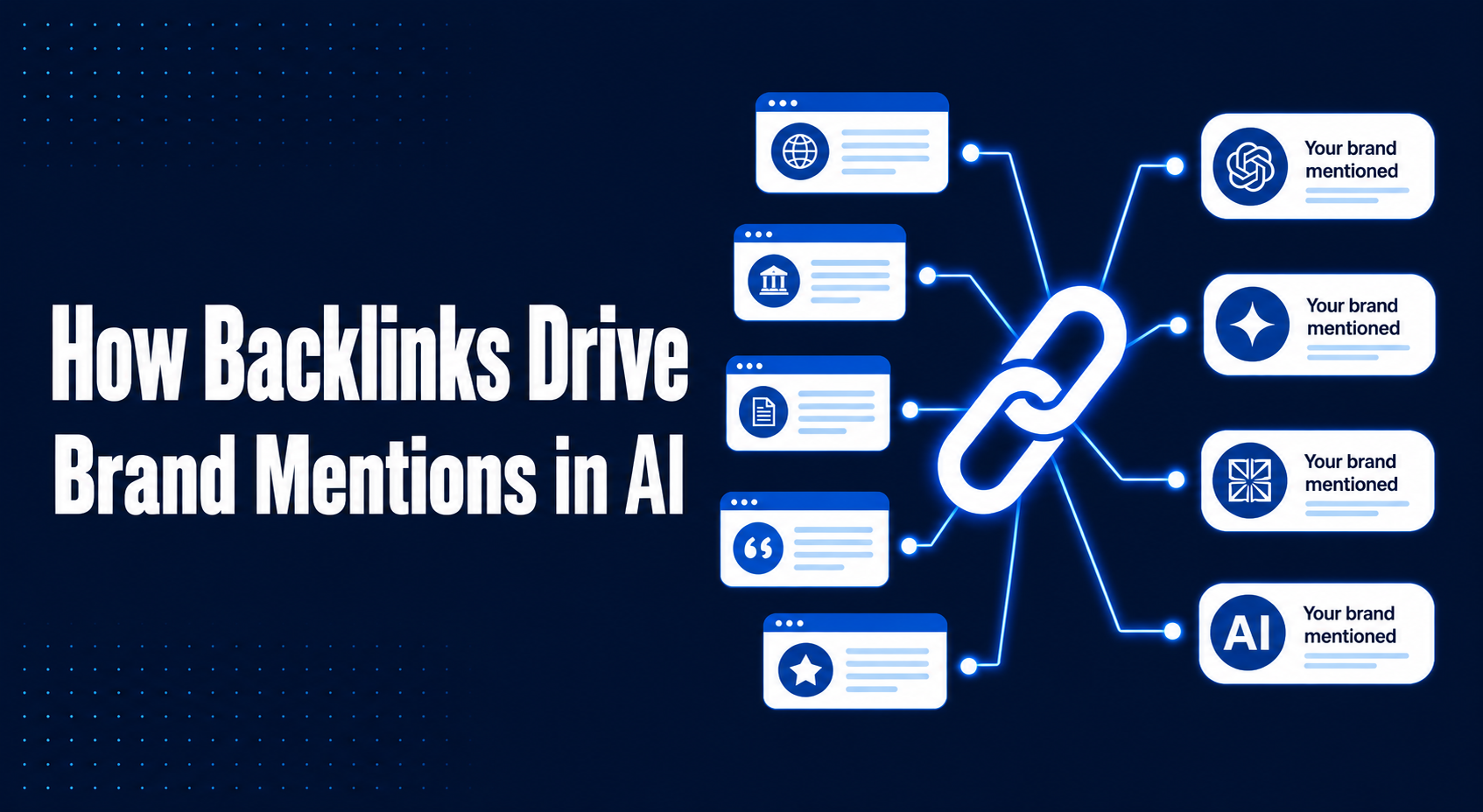
Why Backlinks Are Now The Primary Driver Of Brand Mentions In AI Answers