Key Takeaways
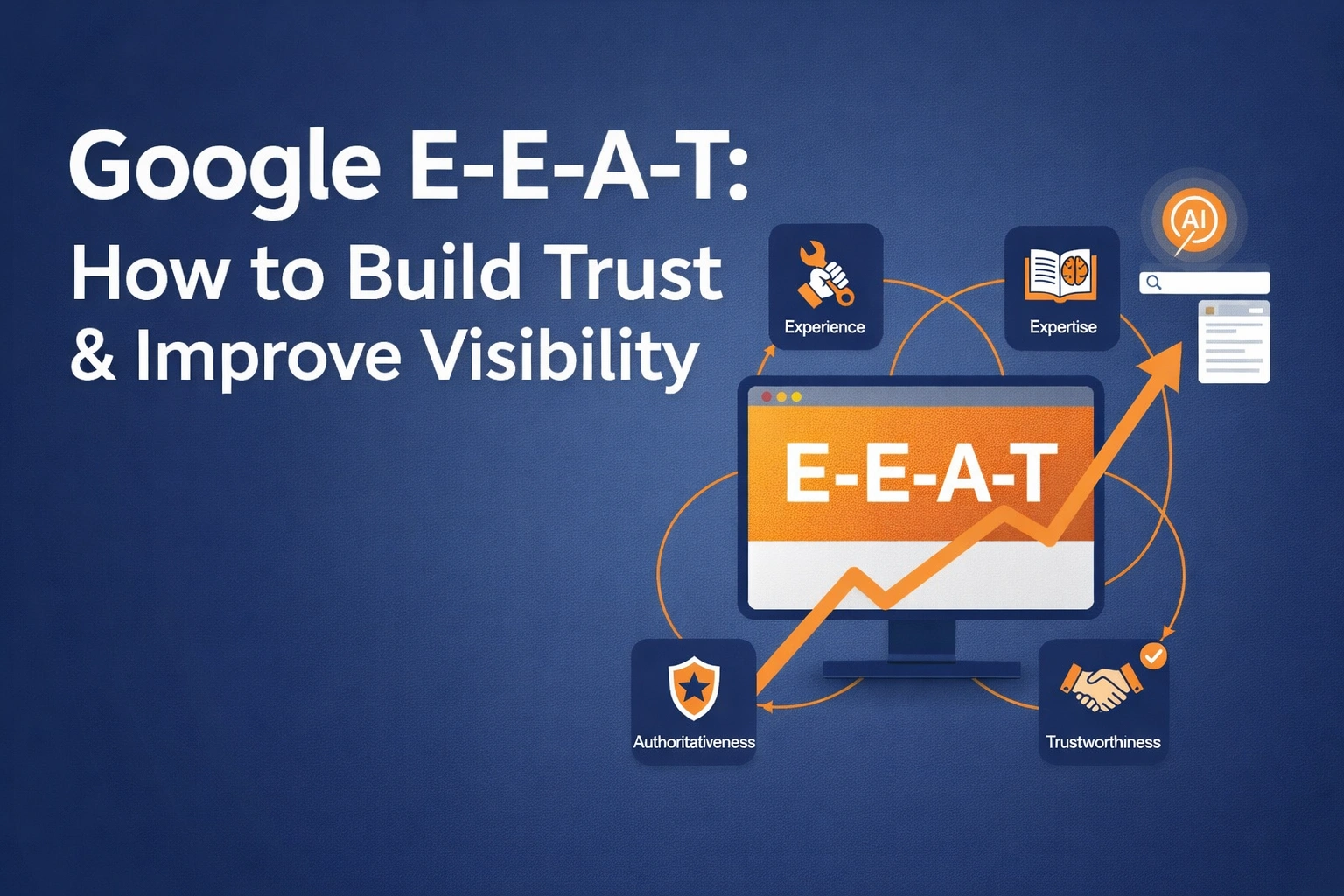
- EEAT is a content quality framework built around Experience, Expertise, Authoritativeness, and Trustworthiness, used in Google’s quality rating guidance.
- Trust is the central element because pages can look expert yet still be unsafe or unreliable.
- EEAT is not a public Google score, but stronger trust signals can improve content quality, brand credibility and long-term search visibility.
AI search growth increases the value of clear, verifiable content, especially as users ask longer, more specific questions.
What Is E-E-A-T?
EEAT is a content quality framework that stands for Experience, Expertise, Authoritativeness, and Trustworthiness.
Google’s documentation and quality rater guidance use this framework to assess content quality and usefulness. Search quality raters do not directly rank pages, but their evaluations help validate search improvements.
Why Does E-E-A-T Matter in the Buyer Journey?
Search behavior is changing fast.
Users now see more AI-assisted summaries and more zero-click search outcomes.
That shift increases the value of:
- clear authorship
- source-backed claims
- original experience
- brand trust signals
- answer-first formatting
Google also advises publishers to focus on unique, non-commodity content that satisfies users, including in AI search experiences.
Why Is Trust the Core of E-E-A-T?
Google’s 2025 Search Quality Evaluator Guidelines state that trust is the most important member of the E-E-A-T family.
That means:
- a page can look polished
- an author can sound expert
- a brand can appear authoritative
But if the page feels unsafe, misleading, or deceptive, EEAT fails.
What Does “Trust” Look Like on a Page?
Trust usually appears through visible proof:
- named author and credentials
- editorial review details
- accurate claims with citations
- contact and business information
- secure website experience
- transparent policies
- real reviews or case evidence
Google’s rater guidance also shows that the required level of trust depends on the topic. High-impact topics need stronger proof.
How Do the Four E-E-A-T Components Work Together?
E-E-A-T signals work together, not in isolation.
What Is Experience in EEAT?
Experience is first-hand or life experience relevant to the topic.
Examples:
- product tested by the reviewer
- software used in a real workflow
- strategy applied in a live campaign
- issue solved in a real business context
Experience makes content harder to fake.
It also helps content stand out from generic summaries.
What Is Expertise in EEAT?
Expertise is demonstrated knowledge or skill in a topic.
This can come from:
- professional background
- certifications
- years of practice
- technical depth
- strong, accurate explanations
What Is Authoritativeness in EEAT?
Authoritativeness is recognition as a trusted source in a niche.
Signals often include:
- backlinks from relevant sites
- mentions on reputable publications
- references from industry communities
- brand searches
- citations in expert roundups
What Is Trustworthiness in EEAT?
Trustworthiness is the degree to which a page, author, and website are reliable, accurate, honest, and safe.
Trustworthiness is supported by the other three factors.
It is also the final deciding layer.
How Do Google E-E-A-T Guidelines Affect Website Visibility?
EEAT is often misunderstood as a direct ranking metric. It is better treated as a quality framework.
Many SEO education sources explain that EEAT is not a public numeric ranking factor. Still, pages aligned with EEAT usually perform better because they improve user trust and content quality.
What Is the SEO Benefit of Strong EEAT Signals?
Strong EEAT signals can improve:
- click confidence
- engagement quality
- conversion readiness
- brand recall
- citation likelihood in AI-driven search environments
Why Does EEAT Matter More in 2026?
Search visibility now depends on more than blue-link rankings.
Users compare sources faster.
AI-assisted search surfaces answers faster.
Trust signals matter earlier in the journey.
Google’s people-first content guidance also reinforces this direction.
It emphasizes helpful, reliable, user-first content and encourages creators to evaluate content through E-E-A-T and quality rater principles.
What Are the Most Important E-E-A-T Signals to Audit First?
Below is a practical eeat checklist-
Want a faster starting point? Run your page through the LeadWalnut E-E-A-T Score Checker to spot key trust gaps before doing a manual audit.
How Can Teams Improve E-E-A-T Score Without Rewriting Everything?
A full rewrite is not always needed.
Most teams can improve EEAT in layers.
Step 1: Add Visible Trust Elements
Start with site-wide signals:
- About page clarity
- contact details
- editorial policy
- privacy policy
- author pages
- reviewer pages
- customer support routes
Examples:
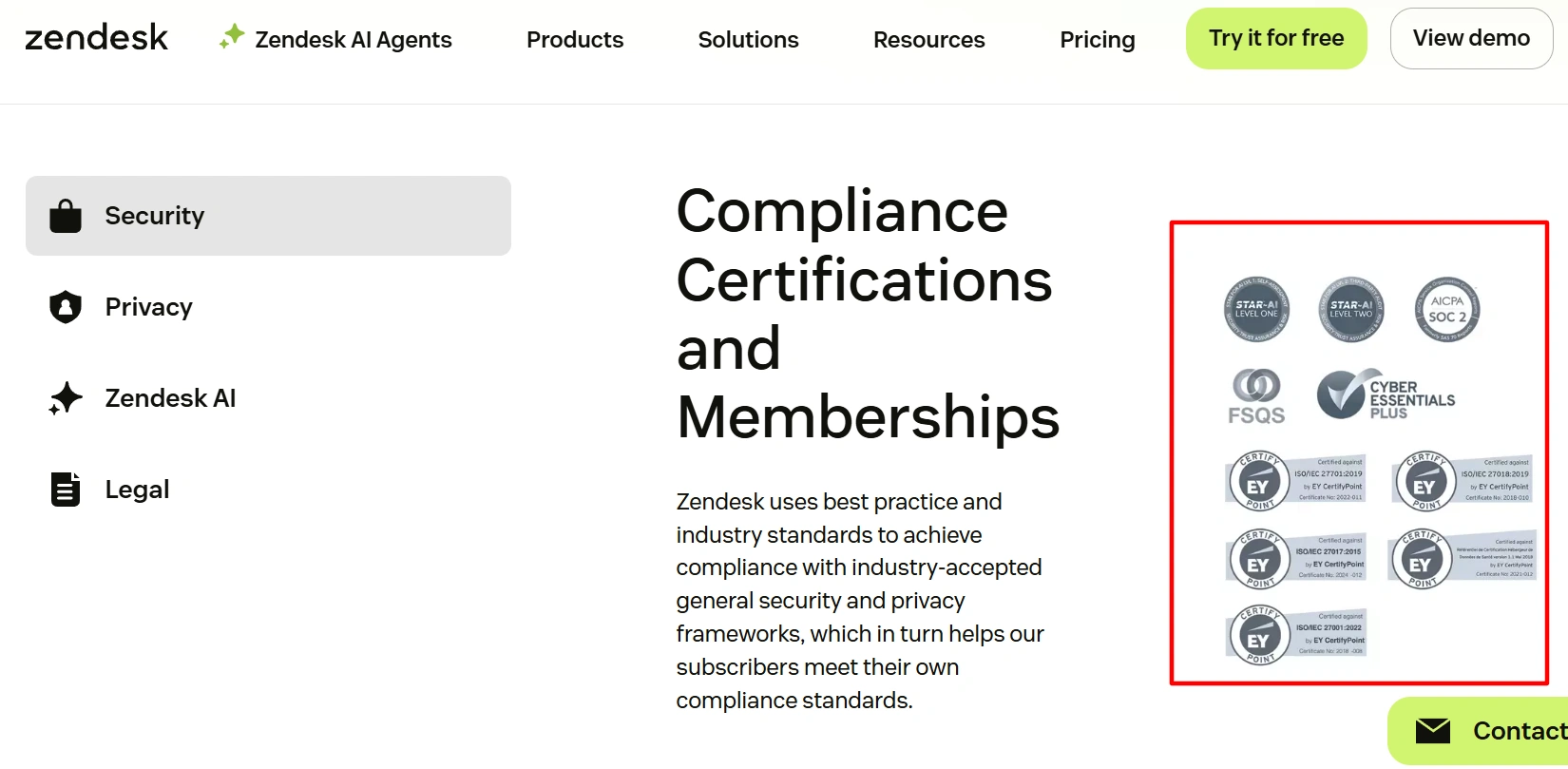
1. Zendesk Trust Center - Publishes enterprise trust and compliance resources, including SOC 2 Type II and ISO certifications, along with privacy and data protection documentation, helping buyers validate security readiness early.
2. Anydesk - Clear customer support routes

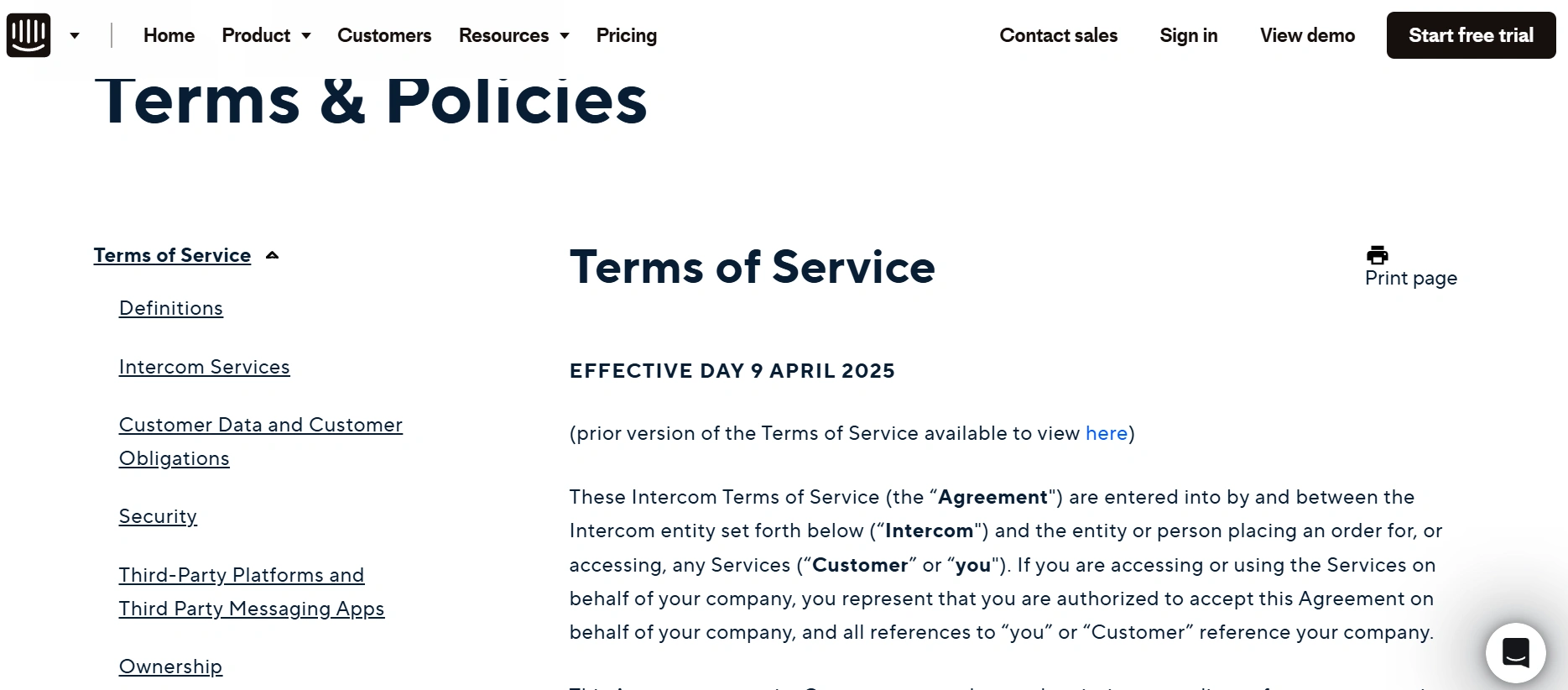
3. Intercom Legal Hub - A centralized legal resource with clearly labeled Terms of Service, definitions, security, and third-party platform clauses, making key trust and compliance information easy to find and review.
Step 2: Strengthen Author and Reviewer Identity
For blog content:
- add named author
- add role and expertise
- add reviewed-by expert for technical topics
- link author profile pages
- include publication and update dates
Examples:
HubSpot Blog - Features author bylines like "Kipp Bodnar, CMO" with direct role relevance to marketing. Each author has a dedicated profile page linking to their expertise.
.webp)
Step 3: Add First-Hand Evidence
For product & saas tools add:
- screenshots
- examples
- test setups
- Benchmarks
- before/after outcomes
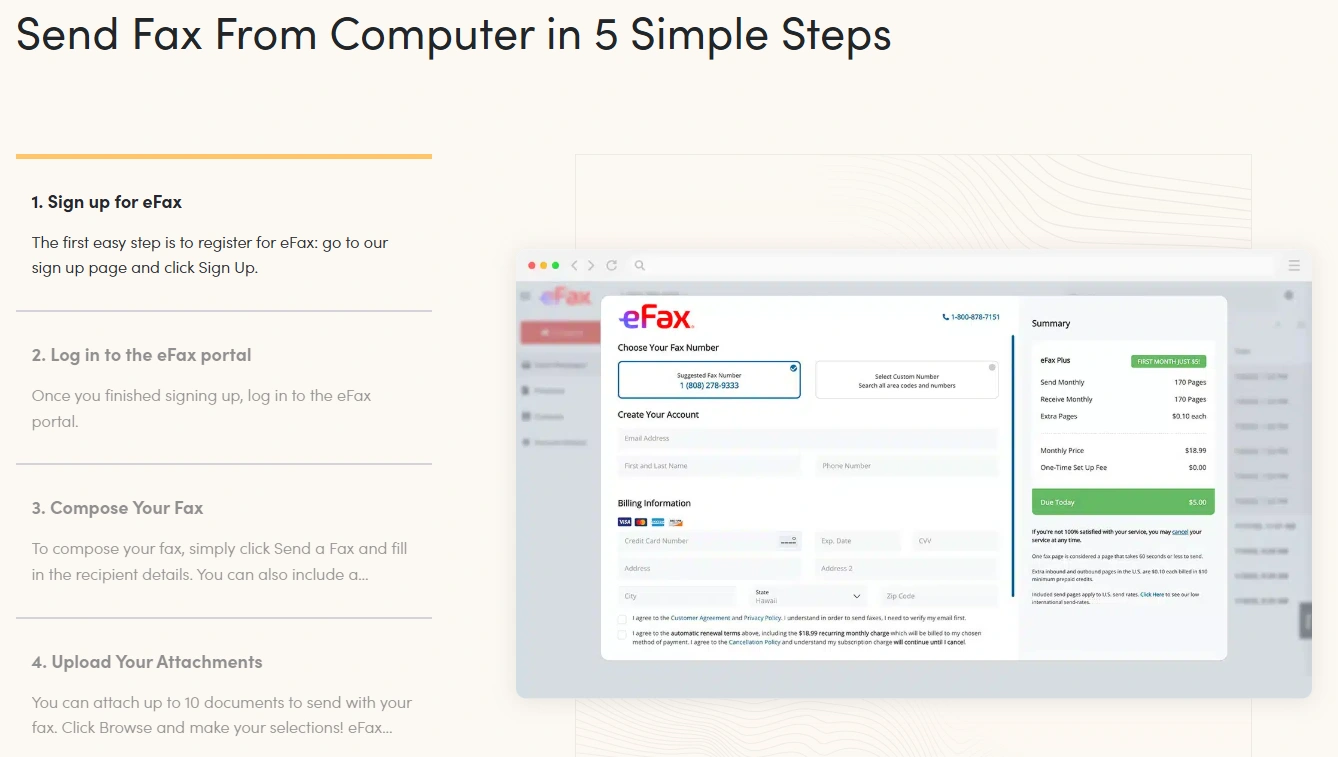
Example:
eFax - Uses interface screenshots and an interactive demo on “How to Send Fax From Computer” to show first-hand product usage, making the experience signal more visible and easier to trust.
Step 4: Improve Claim Quality
Every important claim should have one of these:
- data source
- official documentation
- trusted third-party reference
- real internal evidence
Example:
Ahrefs Claim Quality — Supports key explanations with official Google-linked references and third-party sources, showing how important claims should be backed by verifiable documentation instead of unsupported statements.
.webp)
Step 5: Improve On-Page Readability
EEAT content should be easy to scan:
- short paragraphs
- question-led headers
- tables
- bullets
- definitions
- summary blocks
This format helps readers and LLMs extract answers faster.
Example
Palo Alto Q-Day Guide — Uses question-led headings, a clear definition, expert quotes, and scannable sections to make complex content easier for readers and LLMs to parse.
.webp)
What Does an E-E-A-T Audit Look Like for a Blog Page?
An eeat audit should review both page-level and site-level signals.
Page-Level EEAT Audit Checklist
- Does the article answer the search intent early?
- Is the author visible above the fold?
- Is expertise demonstrated, not just claimed?
- Are facts cited to reliable sources?
- Are examples original and specific?
- Is the article updated for 2025 or 2026?
- Are trust-reducing claims removed or clarified?
- Is the CTA aligned to awareness-stage intent?
- Are relevant page-level schema types implemented correctly?
Site-Level EEAT Audit Checklist
- Are author pages indexable and useful?
- Is the brand identity consistent across pages?
- Are case studies and testimonials visible?
- Are legal and trust pages easy to find?
- Is there evidence of ongoing content maintenance?
- Does the website show topical authority for the target topic?
- Are relevant backlinks supporting site authority?
- Are trust and compliance badges visible where relevant?
- Are third-party reviews or ratings visible (for example, Trustpilot or Clutch)?
For teams that want to speed up this check, check out this E-E-A-T audit tool comparison, which shows which tools surface useful gaps rather than just generic scores.
What is an E-E-A-T Score and How Should it be used?
An eeat score is a practical internal benchmark used by tools or teams to evaluate trust and content quality signals.
Google does not publish an official EEAT score.
Ahrefs and Semrush both frame EEAT as a quality framework, not a simple score, and emphasize trust and execution signals.
So, any tool-based score is a proxy framework.
How Should an Internal EEAT Score Be Used?
Use it to:
- compare pages
- prioritize fixes
- track progress over time
- standardize reviews across writers and editors
Avoid using it as:
- a direct predictor of rank
- a substitute for audience research
- a replacement for editorial judgment
What Are the Latest E-E-A-T and Content Trust Trends in 2026?
1. AI Search Expands Source Competition
Google announced broader AI Overviews availability across countries and languages in 2025. That increases competition for citations, not only blue-link rankings.
2. Zero-Click Search Pressure Is Rising
Industry reporting in 2025 showed lower organic click share and higher zero-click behavior in some markets. This makes brand trust, answer quality, and a disciplined SEO strategy and implementation more important.
3. Review Trust Signals Matter More
BrightLocal reports that 97% of consumers read reviews online, and 41% “always” read reviews when browsing businesses in 2026. This supports stronger trust and reputation sections on brand websites.
4. Trust Is a Wider Market Issue
Edelman’s 2025 Trust Barometer shows business as the most trusted institution globally at 62%.
Trust remains a strategic brand asset, not only an SEO concept.
What Expert Opinions Help Explain E-E-A-T in Practical Terms?
1. People-First Content Wins
Google’s Search guidance and AI search guidance both emphasize helpful, satisfying, people-first content.
2. First-Hand Experience Improves Trust
Leading SEO educational content repeatedly highlights direct experience, author transparency, and proof-backed content as core EEAT practices.
What Should Teams Do First to Improve E-E-A-T?
EEAT is not a keyword tactic. It is a credibility framework.
The fastest gains usually come from:
- visible proof
- better sourcing
- stronger author signals
- cleaner trust pages
- clearer formatting
Start with top business priority pages.
A tool like the LeadWalnut E-E-A-T Score Checker can help by checking a URL and surfacing:
- Your overall E-E-A-T score
- Breakdown across Experience, Expertise, Authority, and Trust
- Key strengths and credibility gaps
- Prioritized recommendations to improve performance
This makes it easier to decide what to fix first.
And scales better than rewriting everything.
FAQ
Can AI-written content have a strong EEAT?
Yes, if edited by subject experts and supported with original evidence, citations, and clear authorship.
Does EEAT matter for service pages and category pages?
Yes. EEAT matters across page types, especially where users must trust claims, pricing, or expertise.
Can a small website build a strong EEAT without many backlinks?
Yes. Small sites can still build strong EEAT through expertise, proof, source quality, and transparent authorship.
Should every article include an expert reviewer?
Not always. Every article should have a clearly identified author, but expert review is most important for technical, regulated, or high-risk topics. For lower-risk content, editorial review may be enough.
Can screenshots improve EEAT if there is no original data?
Yes. Screenshots can support experience signals when they show real workflows, interfaces, or examples.
How often should author bios and reviewer details be updated?
Review them at least quarterly or after role changes, certifications, or major content responsibility updates.
What sources are best for EEAT-related claims?
Use primary documentation first, then trusted industry publications, then supporting third-party references.



How can LeadWalnut help?

Related Articles
Which AI Writing Tools Earn a Citation in 2026?
How to Earn Citations from High-Authority Publications