What Are Brand Mentions And Why They Matter In AI Search
A brand mention is any reference to a company, product, or person on the web, with or without a hyperlink. In traditional SEO, mentions were a soft signal. In AI search, they are a primary one. ChatGPT, Perplexity, Google AI Overviews, and Gemini pull from sources where a brand shows up often, in context, and near trusted competitors.
This shift is why backlinks for brand mentions now sit at the center of modern visibility strategy. AI engines do not just count links. They read the pages around your brand to decide who you are, what you do, and whether you belong in an answer. A single link on the right listicle can trigger repeat mentions across multiple LLMs for months.
For B2B SaaS brands, this changes the goal of link building. The win is no longer only referral traffic or domain rating. The real prize is being cited by name when a buyer asks an AI engine for the best tools, top vendors, or trusted alternatives in your category. That is where brand mentions in AI search compound into the pipeline.
Traditional SEO Driven Backlinks vs AI Search Backlinks
Backlinks still matter, but the scorecard has changed. What earned rankings in 2020 does not always earn AI citations in 2026.
Linked Mentions Vs Unlinked Mentions
Both linked and unlinked mentions feed AI engines, but they carry different weight. Linked mentions pass authority and confirm the entity. Unlinked mentions still shape context and co-occurrence, which LLMs use to map your brand to a category.
For link building for LLM mentions, both types matter. A healthy backlink profile earns linked mentions, and those linked pages often trigger unlinked mentions elsewhere as writers cite the same source.
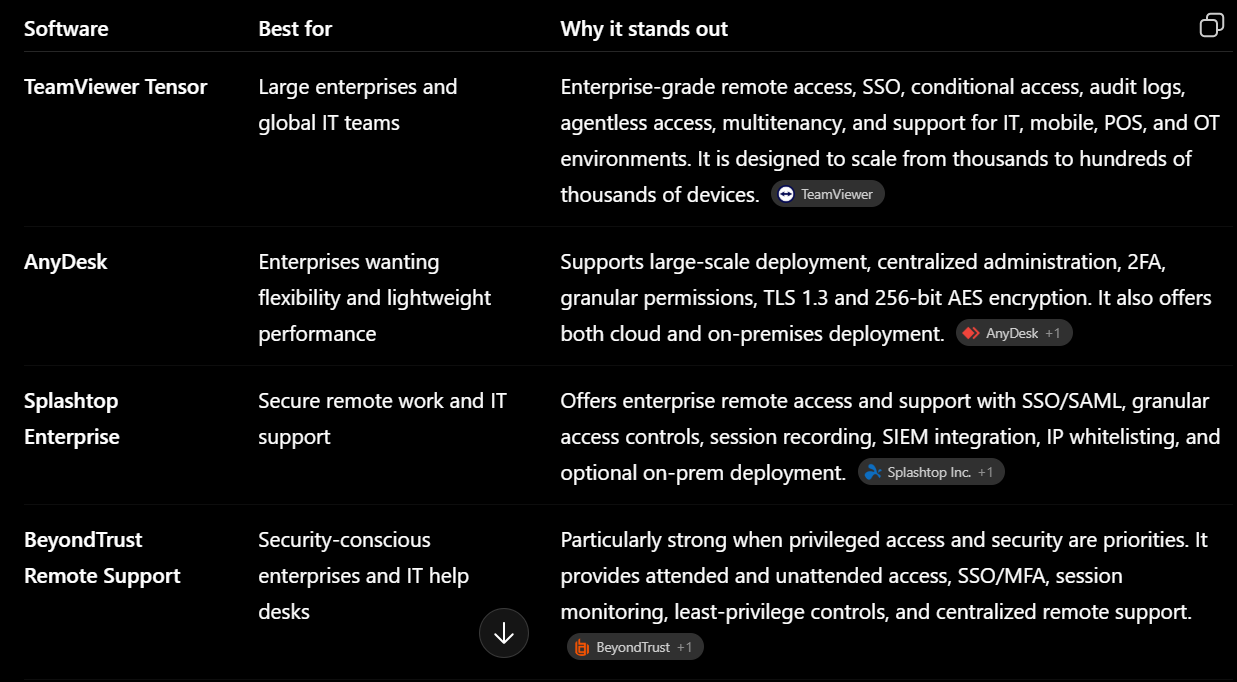
The example below shows both mention types in a single AI answer. Each brand is named in the response text, and several are backed by a linked citation chip pointing to a source.
Why AI Engines Rely On Brand Mention Frequency
AI engines rank sources by authority, freshness, and how often a brand appears in trusted contexts. Frequency becomes a proxy for relevance. A Pew Research Center study found click-through rates drop from 15% to 8% when an AI Overview appears. The click is disappearing. The mention is what survives. Brands with steady mention velocity across listicles, review sites, and analyst pages get cited repeatedly. Sporadic ones get skipped, even when the product is strong.
How Backlinks Translate Into Brand Mentions In AI Answers
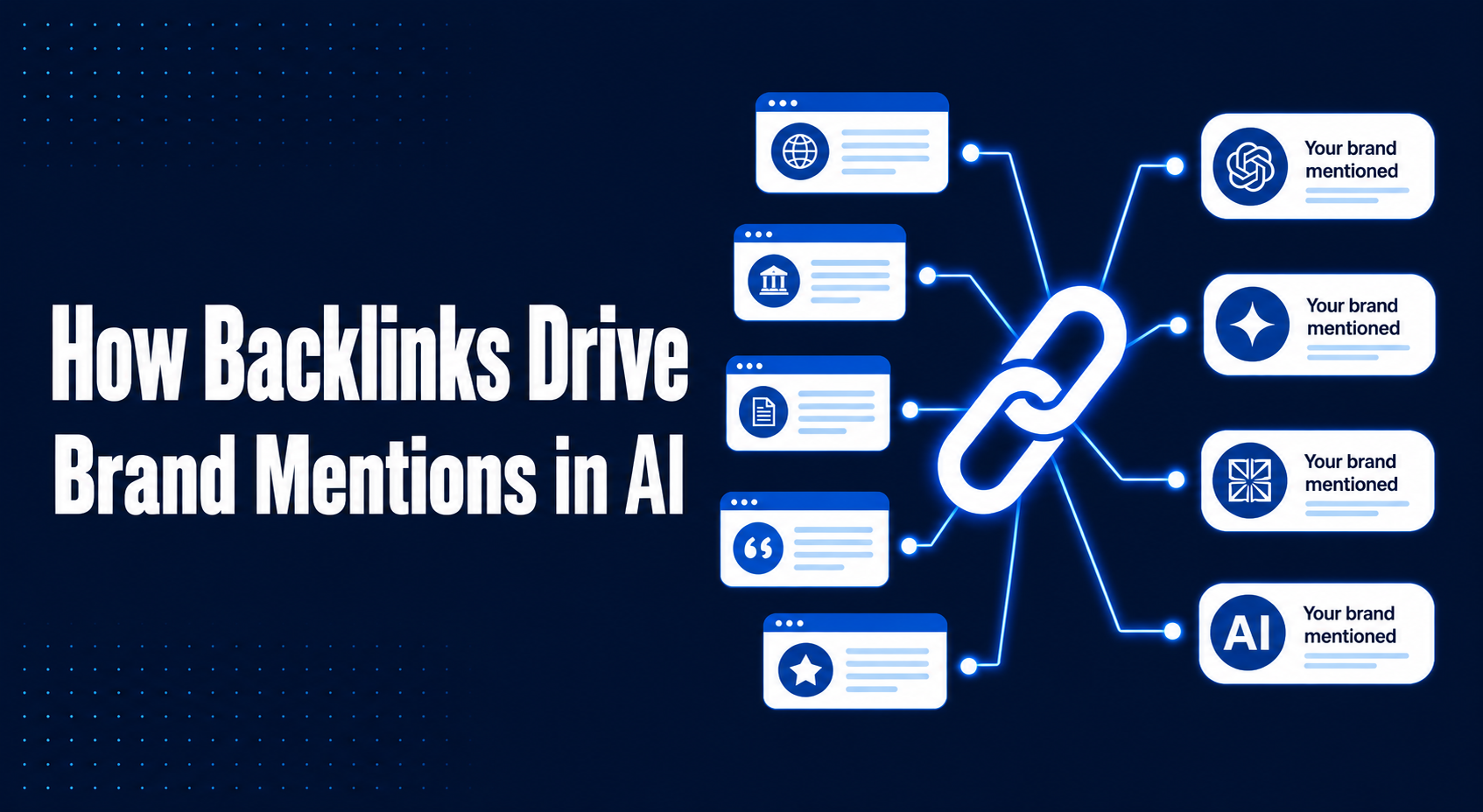
Backlinks translate into brand mentions in AI answers by feeding two systems at once: the training data that shapes what LLMs already know, and the retrieval layer that pulls fresh sources during a query. A single high-quality link touches both. Here is how the process actually works, step by step:
- Discovery. A trusted site links to your brand inside a category-specific context (a listicle, a review, a comparison). Crawlers from GPTBot, ClaudeBot, PerplexityBot, and traditional search engines index the page.
- Entity association. The LLM records not just your brand name and URL, but the surrounding language, competitors listed nearby, and the use cases attached to you. This is how AI engines learn what you do and who you sit next to in the market.
- Authority weighting. Pitchbox's data study on backlinks and AI search found that referring domain diversity carries the strongest correlation with LLM rankings (+0.62), well ahead of raw backlink volume. Variety of sources beats concentration.
- Retrieval pool entry. For live queries, LLMs often pull from top-ranked Google and Bing results. Ahrefs' March 2026 analysis of 4 million AI Overview citations found that 38% of cited pages also rank in Google's top 10 for the same query, down from 76% a year earlier. Rankings still matter, but the retrieval net is widening.
- Citation and recommendation. Once a brand appears often enough across trusted sources, AI engines start naming it in answers, comparisons, and adjacent prompts, without needing a fresh crawl each time.
This is why backlinks for brand mentions now sit upstream of almost every other AI visibility tactic. Content alone does not earn citations. Content plus a network of trusted links does. LeadWalnut's work on how B2B brands earn citations in AI search shows this loop playing out inside a single enterprise category.
The Co-Citation And Co-Occurrence Signal
Co-citation happens when two brands appear on the same trusted page. Co-occurrence happens when a brand shows up near category keywords across many pages. AI engines use both to map who competes with whom.
A backlink from the right listicle beats one from a generic blog. Sitting next to established players on a "Top 10 Vendors" page teaches AI engines the brand belongs in that category. Ahrefs' research confirms this is a strong predictor of AI mentions.
Why LLMs Treat Backlinks As Trust Anchors
LLMs cannot verify facts the way a human can. They lean on structural signals to decide which sources to trust, and backlinks are one of the clearest. Here is why:
- Consensus signal. Multiple credible sites linking to the same source suggest broad agreement, which LLMs weigh during training.
- Authority transfer. A link from a high-authority publisher raises the destination page's odds of being retrieved and cited.
- Freshness proxy. New backlinks signal ongoing relevance. Recently updated pages are far more likely to be cited than older ones.
- Retrieval eligibility. LLMs pull from top-ranked search results, and backlinks remain a core input to those rankings.
- Entity verification. Links from trusted sites confirm the mapping between a brand name and its domain, reducing misattribution.
For link building for LLM mentions, the best backlinks are not always the highest DR ones. They are the ones on pages AI engines already trust.
5 Backlink Types That Drive Brand Mentions In AI Search
Not all backlinks earn AI citations. The ones that do share a pattern: they sit on pages LLMs already trust, in formats LLMs can easily parse, and in contexts that place your brand next to established peers. These five types consistently move the needle.
1. Listicle Backlinks: The Highest-Leverage AI Mention Driver
Listicle backlinks are the single highest-leverage placement for brand mentions in ChatGPT, Gemini, Perplexity, and Google AI Overviews. Evertune's analysis of 400 million AI citations found that 63% pointed to listicles, and 71 to 86% of those were ranked "Top N" formats.
The reason is structural. Each entry in a listicle is a discrete, pre-chunked block with a brand name, a description, and often pricing or features. LLMs can extract it cleanly and reuse it across dozens of adjacent queries.
2. Digital PR Backlinks From Tier 1 Publications
Digital PR backlinks from tier 1 publications like Forbes, TechCrunch, Wired, and Business Insider carry outsized weight in AI training data. These domains sit in the highest trust tier LLMs use for entity verification, and a single feature can trigger months of downstream co-citations as other writers reference the piece.
Muck Rack's analysis of over one million AI-cited links found 82% come from earned media, meaning third-party editorial coverage from credible publications. The mention on the page matters as much as the link itself.
3. Data Study And Original Research Backlinks
Original data studies earn backlinks that keep compounding. Every writer citing your stat links back to your page, and every one of those secondary pages becomes a fresh trust signal for LLMs. Content with statistics and named citations gets 30 to 40% higher visibility in AI responses, according to Topify's analysis of LLM citation patterns.
The play is simple. Publish one benchmark, survey, or industry report per quarter. Pitch it to journalists and category analysts. The resulting backlinks and downstream mentions build the exact frequency signal AI engines use to decide who belongs in a category answer.
4. Guest Post Backlinks On Industry Authority Sites
Guest posts on category-specific authority sites are still valuable, but the target list has shifted. Generic high-DR blogs no longer move the needle. Niche publications your buyers actually read do. A DR 40 site that owns a category can out-cite a DR 80 general blog when its content is more contextually aligned with the query.
The rule is topical relevance over raw authority. A guest post that places your brand next to two or three established competitors, on a page that ranks for a category query, delivers both a linked mention and the co-occurrence signal LLMs use for entity mapping.
5. Review Site Backlinks On G2, Capterra, And TrustRadius
SE Ranking's research found that brands with active profiles on G2, Capterra, and Trustpilot have 3x higher citation probability in ChatGPT than brands without. Review sites are one of the strongest third-party validation signals AI engines look for, and G2 itself ranks as the 4th most-cited domain on ChatGPT.
For B2B SaaS specifically, G2 dominates. Capterra sits as a strong secondary. Trustpilot leans consumers. Concentrate review acquisition on the platform that owns your category rather than spreading effort thinly across all three.
How To Measure Brand Mentions Earned Through Backlinks
Measuring brand mentions earned through backlinks means tracking the link and the AI mention it triggers weeks later. Four metrics matter most:
- Mentions. How often a brand appears in AI responses, linked or unlinked.
- Citations. How often the brand's domain is cited as a source in AI answers.
- AI Share of Voice. Brand mention frequency versus competitors, as a percentage.
- Referring domain diversity. The number of unique domains linking to the brand.
Tools like Ahrefs Brand Radar, Profound, and Semrush Enterprise AIO track the first three across ChatGPT, Gemini, Perplexity, and AI Overviews.
Pairing one with a backlink tool traces a single link placement to a lift in share of voice. LeadWalnut's Backlink Agent is built around this loop.
Turn Your Backlink Strategy Into An AI Visibility Engine
Backlinks now do double duty: every link earns rankings and trains AI engines to name a brand in answers. The shift is simple. Stop chasing raw DR. Start building the mention frequency LLMs reward through listicles, digital PR, review sites, and original data.
Teams that map link outreach to AI visibility gaps, not vanity metrics, own their category in ChatGPT, Perplexity, and Google AI Overviews. Splashtop's team saw the ranking half of this compound firsthand:
"LeadWalnut applied sharp and vigilant backlinking strategies across multiple key service pages. This boosted our Domain Authority and propelled most pages to page 1, with many landing in the top 10 positions on Google."
— Senior Digital Marketing Manager, Splashtop
The same link-building approach that lifted their Google rankings now compounds into AI answer visibility.
FAQ
Do AI engines like ChatGPT actually read backlinks in real time?
Not directly. AI engines use backlinks indirectly, through training data and through rankings on Google or Bing, which feed live retrieval. The link influence is real but layered.
How long do backlinks take to influence brand mentions in AI search?
Usually 4 to 12 weeks. AI models refresh training data and retrieval indexes on staggered cycles, so a new backlink rarely shifts citations overnight, even from a top-tier source.
Do nofollow backlinks help with brand mentions in AI search?
Yes. LLMs read the surrounding text, not the rel attribute. A nofollow mention on a trusted publisher still teaches AI engines that a brand belongs in a specific category.
Which AI engine relies most heavily on backlinks?
ChatGPT and Claude weight backlink signals most strongly. Gemini and Grok lean on broader factors like freshness, brand mentions, and semantic relevance alongside link data.
Can a brand earn AI mentions without any backlinks at all?
Rarely at scale. Unlinked mentions on Reddit, YouTube, and review sites can drive citations, but sustained visibility in ChatGPT and AI Overviews almost always needs a backlink foundation.
How many backlinks are needed to appear consistently in AI answers?
Referring domain diversity matters more than volume. Brands cited by 200+ unique referring domains in a category typically start appearing in AI answers with real consistency.



How can LeadWalnut help?

Related Articles
Landing Page Conversion Rate: Benchmarks for B2B SaaS
How AI Answer Engines Choose Which Product Pages to Cite